What Did Pepsi Say About Wild Cherry? Controversial ‘Permission’ Post Explained
Pepsi has apologized and deleted a social media post promoting its Wild Cherry soda after a seemingly simple piece of wordplay triggered an unexpectedly serious debate about consent.
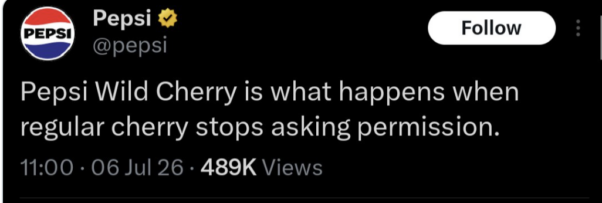
The controversy began after Pepsi posted the following message on Threads on Monday, July 6:
“Pepsi Wild Cherry is what happens when regular cherry stops asking permission.”
The line was apparently intended to describe Wild Cherry as a bolder, less restrained version of regular cherry. However, many social media users interpreted “stops asking permission” as a reference to ignoring consent.
Screenshots of the post quickly spread across Threads, X, Facebook and Instagram. Critics accused the company of using language that appeared to make light of sexual assault or “rape culture” in order to sell soda. One commenter described the wording as being in “extremely poor taste,” while others questioned how the post had made it through a major corporation’s marketing approval process.
Pepsi removed the original post and issued an apology on Tuesday, July 7.
“Our recent Wild Cherry post landed in a way we never intended,” the company wrote on Threads. “We hear you, we’re sorry, and the post has been deleted.”
Not everyone believed the post was a joke about consent.
Several users argued that critics had attached a sexual meaning that was never present in the wording. Journalist Yashar Ali said he did not believe Pepsi had intentionally posted a “rape culture” joke, arguing that the combination of “wild” and “stops asking permission” was clearly meant to suggest becoming uninhibited or rebellious.
https://x.com/yashar/status/2074593326620119168?utm_s
Other commenters similarly said they initially read the post as being about a cherry deciding to do what it wanted without seeking approval, not one person ignoring another person’s refusal.
Still, critics maintained that a major brand should have anticipated how language involving permission could be interpreted, particularly when the wording was stripped of any additional context.
The controversy also revived memories of Pepsi’s infamous 2017 advertisement featuring Kendall Jenner. That commercial showed Jenner handing a Pepsi to a police officer during a protest, apparently easing tensions between demonstrators and law enforcement. It was widely criticized for trivializing real protest movements and was withdrawn after only one day.
At the time, Pepsi acknowledged that it had “missed the mark” and apologized for making light of a serious issue.