Catie Norboe Responds After OCD Treatment Center Criticizes Her ‘90 Day Fiancé’ Storyline
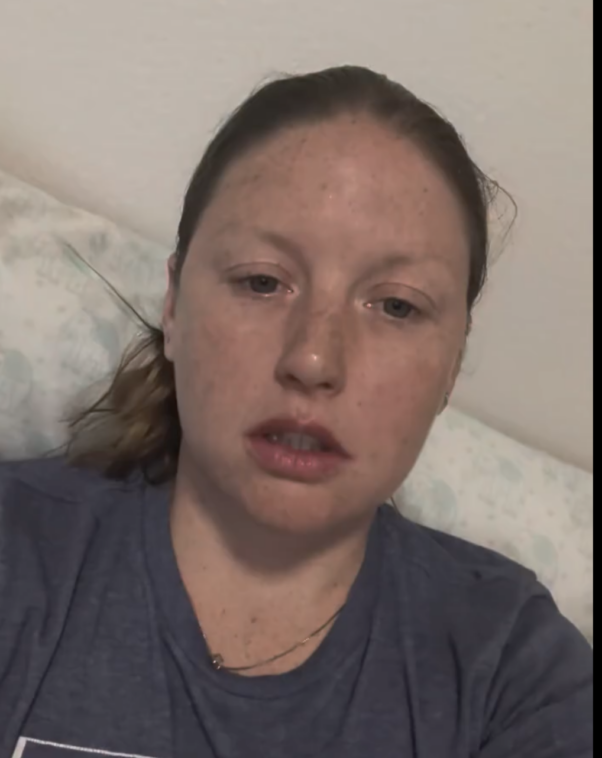
90 Day Fiancé star Catie Norboe is pushing back after NOCD dropped a video questioning her whether the behavior shown in her reality television storyline was consistent with obsessive-compulsive disorder. Catie has been receiving therapy from NOCD.
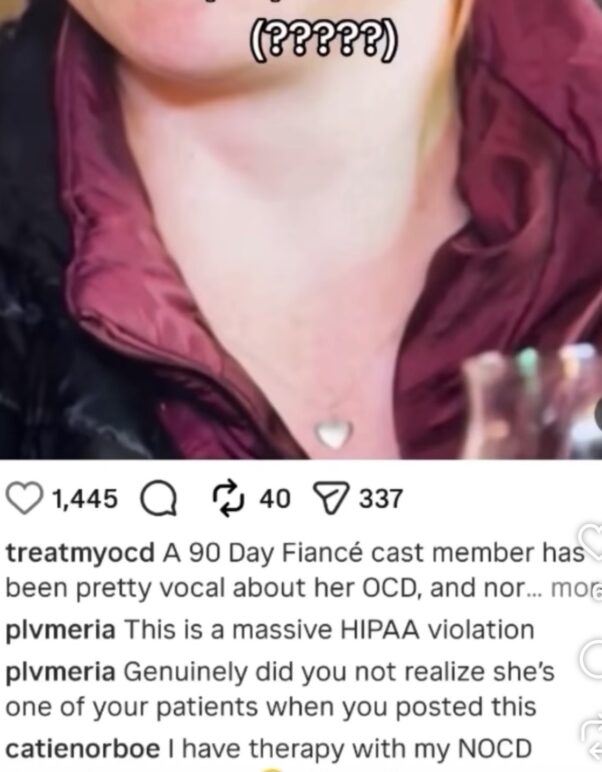
*Note: At the time we posted this, the NOCD video Catie responded to had been taken down, and there was no reupload. Catie has since provided screenshots of the NOCD video. They have the Instagram handle “treatmyocd.”***
Catie argued that the commentary relied on a small selection of heavily edited television footage while ignoring years of symptoms, treatment and conversations about OCD that were never shown to viewers.
“Yes, reality TV kind of laid it out like my OCD makes me make out with people,” Catie said in a series of social media videos. “Take into account, it’s a highly edited TV show.”
She acknowledged that she was uncomfortable with some of the behavior shown during the season, particularly scenes involving alcohol.
“There are actions I’m not proud of,” she said. “I don’t like watching myself back drunk. That was bad. But I do have OCD.”
@catienorboe Rant About NOCD: Trusted @NOCD as a therapy platform and they made a reel about me on Instagram. I DO have OCD although the show doesn’t really include all the details about it, I am a literal patient of NOCD and this feels violating. Maybe focus on the media’s representation of OCD rather than a specific cast member who struggles with it and has no control over the edit. #nocd #ocd #ocdawareness #90dayfiance #90dayfiancé
Catie said the program’s focus on her kissing other people created an incomplete and potentially misleading picture of how OCD has affected her life.
“Do you know how much we filmed and I talked about OCD that they didn’t show on the show?” she asked. “I actually have OCD. I’ve struggled with it for years.”
She explained that her compulsions more commonly involve repetitive mental rituals rather than the physical behavior emphasized in her television storyline.
“My compulsions aren’t me making out with people,” she said. “They’re mind loops that I have to do to neutralize a thought.”
Catie said she generally avoids discussing the specific intrusive thoughts behind those compulsions because they are “stressful and horrible.” However, she described a particularly difficult period during the COVID-19 pandemic.
“During 2020, during the pandemic, I was unfunctional,” she said. “I spent hours in the bathroom just trying to think through my head about how I wasn’t a bad person.”
Catie recalled becoming trapped in questions about whether she had harmed someone and feeling unable to focus until she could mentally prove that she had not.
“I was like, ‘Did I harm this person? I need to prove that I didn’t harm this person, or else I can’t focus on anything,’” she said.
According to Catie, she may have discussed those experiences while filming, but the footage was either omitted or presented without enough context to accurately represent her symptoms.
“I wanted to address that specifically because I go there for therapy, and I’ve worked with an OCD specialist for a while, and I actually really like her,” she said.
She added that the tools she received through the platform had been helpful but questioned whether she could continue supporting a company that had publicly commented on her.
“I don’t know if I can keep supporting that company because they’re taking reality TV and discounting my OCD,” she said. “I am a person.”
Catie also said she was “disgusted” by the idea that a platform intended to support people with OCD would publicly discuss one of its own patients without knowing the full story.
Josh posted his own response to a separate video from the Institute of Texas, saying he became too “pissed off and distracted” to ignore the video.
“I just think it’s so unethical,” he said.
Josh acknowledged that the show contains scenes that may reasonably cause viewers to question Catie’s behavior. He also said watching the season had become an exercise in self-reflection for him. However, he argued that clinicians should be held to a different standard than ordinary reality television viewers.
“There’s just a certain level of common decency and respect that I think you owe to someone,” he said. “You don’t just take a couple seconds of TV clips and then infer judgment.”
“I think that’s below the belt,” he continued. “I think it’s punching down, and I fucking hate that.”
Josh rejected the idea that the institution was merely discussing OCD in general or attempting to educate viewers.
@joshatkins.uk Afraid I couldn’t let this BS slide, it’s utterly lacking any decent ethical standard in my opinion. #ocd #mentalhealth #mentalhealthstigma #90dayfiance #90dayfiancé Views expressed in the video are my own opinions.
“If they actually wanted to educate, why not reach out to Catie?” he asked. “Why not include her?”
He argued that medical professionals carry an assumed level of authority and credibility that makes their public statements more consequential than comments posted by viewers online.
“That’s supposed to be the difference between a medical professional and just someone commenting on Reddit,” Josh said. “They’re using their voices and using it to essentially just delegitimize Catie entirely.”
“You don’t have to like her to say that that seems a bit icky,” he added.
Josh also objected to what he described as “sneering,” laughing and smirking in the institution’s video, saying the tone made the commentary appear unserious and more focused on social media attention than meaningful education.
Despite his anger, Josh said the controversy raised worthwhile questions about how OCD is represented on television—particularly when alcohol or other mental health conditions may also be involved.
“There is actually a good question under all of this,” he said. “That is about OCD representation, comorbidities—what does OCD look like with other things going on?”
“OCD and alcohol—that’s the really interesting thing to talk about,” he continued.
Josh said he would welcome discussion with institutions willing to approach the subject thoughtfully and involve Catie rather than simply analyzing edited clips.
“If there are any more serious institutions out there that actually want to do some interesting commentary, I’d welcome that,” he said.
In a portion of the now-deleted original commentary video from OCD Institute of Texas included in fiancé Josh Atkins’ response video, a speaker questioned whether the behavior shown on 90 Day Fiancé resembled OCD.
“She’s not looking or appearing anxious at all,” the speaker said. “She very clearly talks about how she really wants to do this. It feels fun, it feels exciting, it’s something that she’s drawn to.”
“When she’s in this good mood and happy, she’s doing these behaviors,” someone else said. “That is the opposite of OCD.”
The clip appears to focus on scenes in which Catie described feeling an urge to kiss people while drinking. However, Catie’s response was not simply that the clinicians had misunderstood one scene. She argued that they had treated the edited program as a complete representation of her diagnosis.
“The making out with people is how the show chose to portray it,” she said. “But I’ve wasted years of my life doing compulsions and not being able to focus on the moment.”
@theretromom #stitch with @OCD Institute of Texas OCD more makes you engage in activities you’re NOT wanting to do but can’t help doing. #ocdawareness #90dayfiance #ocdproblems