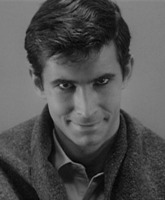
Did a real Marty Supreme exist? Is Marty Supreme based on a true story?
If you’ve seen Timothée Chalamet’s magnetic performance in Josh Safdie’s Marty Supreme, you might be wondering: was there really a ping-pong hustler this audacious and wild?
Marty Supreme is loosely based on Martin “Marty” Reisman (February 1, 1930 – December 7, 2012), a legendary American table tennis champion whose life read like fiction. Nicknamed “The Needle” for his slender build and razor-sharp wit, Reisman dominated the sport in the 1940s and ’50s, winning more than 20 major titles, including the 1949 English Open and two U.S. Opens. But championships were only part of his story. He was a hustler, a showman, and a dapper rebel who refused to conform—whether that meant rejecting conventional employment or stubbornly playing with old-fashioned hardbat paddles while the rest of the world moved on to sponge rubber.
In the gritty, smoke-filled table tennis parlors of midtown Manhattan, where gamblers bet hundreds on a single match and misfits found their calling, Marty Reisman was a star. His game was electric, his personality magnetic, and his refusal to play by anyone’s rules but his own made him a legend. This is his story.
Early Life and Introduction to Table Tennis
Reisman was born on February 1, 1930, in Manhattan, New York City, to Sarah (Sally Nemorosky) and Morris, an Ashkenazi Jewish couple. He grew up on East Broadway with his older brother, David. His father worked as a cab driver. He started playing table tennis after experiencing a nervous breakdown at the age of nine and found it soothing.
Marty played his first money match in a park at 12 years old. He lost, but was hooked. Searching for a place with real players, he met a bookie who spirited the boy uptown to Lawrence’s Broadway Table Tennis Club, a former speakeasy where hustlers competed and gamblers reliably found action. By 14, Marty was supporting himself with table tennis.
The Needle: Style and Showmanship
Reisman was a staple in New York’s table tennis community for decades, known for his ability, flamboyant style, and flair as a showman. He was nicknamed “the Needle” for his quick wit and slender build. Reisman was a daring, relentless showman, always dressed to the nines in elegant suits and hats.
Reisman was known for his showmanship and hustle. He could split a cigarette in half with a ping pong ball from across the net and would play blindfolded or sitting down if the stakes were high enough. “If you look at footage of Marty in the ’50s and ’60s, you could almost compare it to the footage of Houdini. He would blow the ball into the air and then he would, you know, knock it under his leg or just do some acrobats. It was almost like putting on a show.”
Championship Career
Reisman represented the U.S. in tournaments around the world and won more than 20 major titles, including the 1949 English Open and two U.S. Opens. He won his first championship in 1946, becoming the United States Junior National Champion, a feat he repeated the next year. He went on to win multiple others, including a United States Doubles Championship in 1949 and a Singles Championship in 1958.
In 1997, when he was 67, he became the oldest person to win a national championship in a racket sport, per his obituary. When the sport moved from hardbat paddles to sponge rubber, Reisman refused to make the change. “I feel I’d be prostituting a talent that I devoted a lifetime to learning,” he told Sports Illustrated. “The sponge offends my dignity.”
The Harlem Globetrotters Years
Beginning in 1949, Marty Reisman and U.S. teammate Doug Cartland spent three years touring with the Harlem Globetrotters as a halftime attraction. In Berlin, they performed before an audience of 75,000 people. He and U.S. teammate Doug Cartland accepted an offer to be the opening act for three years for the basketball trickster the Harlem Globetrotters, delighting audiences by playing “Mary Had a Little Lamb” using frying pans, according to his biography.
The Money Player: Hustling and Gambling
In his 1974 memoir The Money Player: The Confessions of America’s Greatest Table Tennis Champion and Hustler, Reisman wrote that he was drawn to table tennis because it “involved anatomy and chemistry and physics.” In his 1974 memoir The Money Player, he wrote that top table tennis players had to be “gamblers or smugglers”.
In the 1940s and ’50s, New York City table tennis was a gritty subculture full of misfits, gamblers, doctors, actors, students and more. They competed, bet on the game or both at all-night spots like Lawrence’s, a table tennis parlor in midtown Manhattan. A talented player could rake in hundreds in cash in one night.
As “Marty Supreme” depicts, Reisman worked briefly as a shoe salesman, his only foray into the 9-5 world. For the rest of his life, he relied on his ping-pong skills to make money, he told Forbes. “No one has ever been less suited for regular employment than I was,” he quipped.
Legacy and Inspiration for Marty Supreme
Marty Supreme is a 2025 American sports comedy-drama film co-produced and directed by Josh Safdie from a screenplay he co-wrote with Ronald Bronstein, loosely based on the life and career of American table tennis player Marty Reisman. Timothée Chalamet’s character, table tennis whiz Marty Mauser, is loosely inspired by Reisman.
Film producer Sara Rossein found Reisman’s book at a thrift store a few years ago, gifting it to her husband, filmmaker Josh Safdie, as a potential source of inspiration. It eventually birthed Marty Supreme, which is neither a biopic or adaptation, but a narrative springboard that inspired Safdie and screenwriter Ronald Bronstein to create their own high-stakes storyline of ping-pong hustlers.
His personality made him legendary. Marty Mauser is loosely based on the real-life ping-pong hustler Marty Reisman—a fascinating, colorful and complex man. He died in 2012 at 82 years old of lung and heart complications.